Beyond the assay: A conversation with Helena Almqvist

The science matters. So do the conversations behind it.
Many people think working with an external scientific partner means handing over a project, waiting for the data, and receiving a report a few weeks later. At Pelago, that’s rarely how it works.
Even when a client comes to us for what appears to be a defined service, the process typically begins with a scientific conversation: What question are you really trying to answer? Where does this fit in your program? What decisions will this data inform?
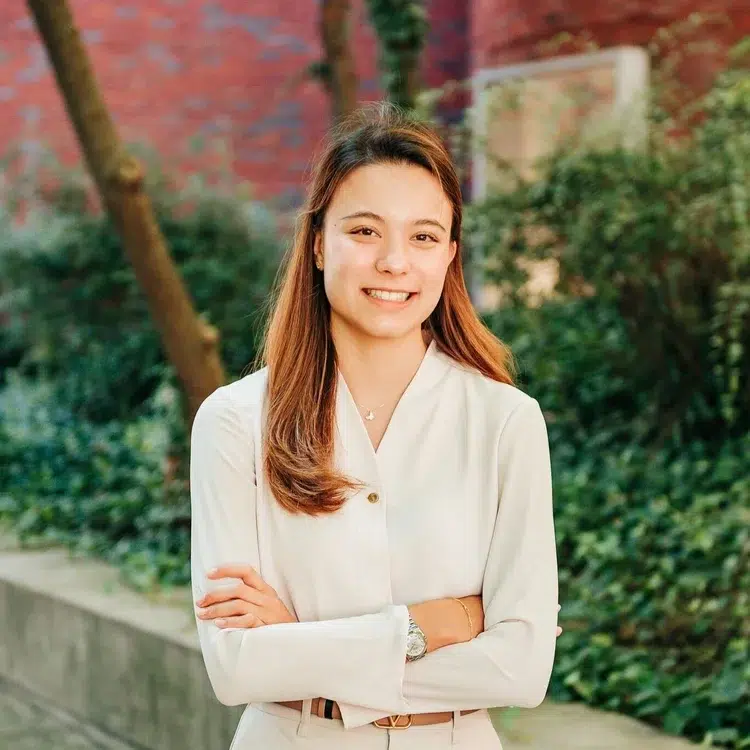
To explore what that looks like in practice, we spoke with Helena Almqvist, Global Key Account Manager at Pelago Bioscience. With a background spanning both scientific and commercial roles, Helena works closely with clients to understand their programs and ensure that Pelago Bioscience’s services deliver meaningful answers rather than simply generating data.
Tell us about your role and what it involves.
I work closely with many of our strategic clients throughout their journey with Pelago, and what I enjoy most is being involved across the entire process. I spend time understanding what clients are trying to achieve, helping scope projects, discussing results, gathering feedback, and thinking about what comes next. In many ways, my role is about connecting different perspectives: the client’s scientific challenges, our scientific expertise and the broader goals of their program.
I’ve been involved with Pelago Bioscience and CETSA® technology for a long time, so it’s particularly rewarding to see projects evolve and the data ultimately help teams make decisions.
What originally drew you to this space?
I’ve always enjoyed solving scientific problems collaboratively. Drug discovery is rarely straightforward. There are always competing hypotheses and difficult decisions to make.
What keeps it interesting is that every project is different. Every client comes with a unique challenge, and no two conversations are the same. The most rewarding part is helping people answer questions that genuinely move their programs forward.
From the outside, some of what Pelago Bioscience offers might look like a menu of defined services. What does that miss about how it actually works?
It misses the conversation. Clients often come to us believing they already know exactly what study they need. Sometimes they’re right, but often, before we even discuss assays or experimental design, we spend time understanding the bigger picture.
We want to know where they are in their program, what data they already have, what decisions they’re trying to make and what challenges they’re facing. That context matters because the study they initially ask for isn’t always the study that will give them the most useful answer.
One of the nicest pieces of feedback I’ve received from a client was simply: “You made us think.” For me, that’s a great compliment. It means we’ve gone beyond being a service provider and become a scientific partner.
What does a first conversation with a client typically look like?
We’re genuinely curious about the science behind the request. Rather than immediately discussing logistics, we first try to understand the project story. We ask a lot of questions: What are you trying to learn? What’s working and what isn’t? What assumptions are you making? What would success look like?
Sometimes clients are surprised by how much time we spend discussing their program before talking about the assay itself, but those conversations are often where the most important decisions get made.
Can you share an example where those early conversations changed the direction of a project?
One example that stands out involved an academic collaborator who approached us to help identify the mechanism of action of a compound. They arrived with a very clear view of how the study should be conducted and were quite firm in their proposed experimental approach.
Rather than immediately executing the requested study, we spent time understanding the scientific question they were trying to answer and reviewing the data supporting their hypothesis. Based on our experience, a different strategy would provide a more robust answer.
After several discussions, we expanded the scope of the study to include experiments on both intact and lysed cells and adjusted key parameters, including incubation times and compound concentrations.
When we eventually presented the results, the collaborator was extremely positive. They told us they were glad they had followed our recommendations because the revised approach generated far more informative and actionable data than their original plan would have delivered. That’s a good example of what partnership looks like in practice.
Where do the interesting scientific decisions happen during a project?
They happen throughout: some during the initial scoping discussions, others when we start seeing data emerge. Sometimes unexpected results force everyone to stop, think and ask new questions.
The important thing is that we’re not simply running an assay and moving on. If something doesn’t look as expected, our scientists will spend time discussing the biology and working with the client to understand what’s happening.
How do you think about a client’s program beyond the specific assay they’ve asked for?
We always try to understand how the data will be used. An assay is rarely the end goal. Instead, it is making a decision, progressing a program, prioritizing compounds or increasing confidence in a scientific hypothesis.
If we understand where the project is headed, we can help clients generate data that supports broader objectives rather than simply answering a narrow technical question. That’s why we often encourage people to engage with us earlier than they think they need to.
What does a great client relationship look like to you?
The best relationships are the ones where scientific discussion flows both ways. Clients feel comfortable sharing challenges and evolving priorities, and we feel comfortable asking difficult questions or challenging assumptions when necessary. When that trust exists, the conversation becomes much bigger than a single project. You’re working together to solve problems, generate knowledge and move the program forward. That’s when the partnership is at its strongest.
Is there something you wish more clients would ask?
I wish more clients would talk to us earlier. Sometimes people come to us after struggling with a challenge for months or even years. By that point, timelines are tight, and budgets are under pressure.
The earlier we can start the conversation, the more opportunities we have to help design the right studies and create a stronger path forward. You don’t need to have all the answers before reaching out. In many cases, that’s exactly what the conversation is for.