
Degraders Beyond Binding: Measuring What Truly Matters
In degrader research, decisions improve when evidence comes from native systems. The focus is on cellular target engagement, event linkage to degradation, and an early view of off-target risks. CETSA provides a practical approach to obtaining this evidence without overcomplicating study designs.
Why Cellular Engagement Matters
Degraders and molecular glues succeed when the compound binds to the target in cells and the binding leads to the intended event. Measurements in physiologically relevant matrices help teams avoid misleading signals from engineered systems and keep projects aligned with translational goals.
What CETSA Measures
CETSA reads shifts in protein thermal stability upon compound binding in intact cells or lysates. Because proteins remain endogenous, CETSA reflects true engagement rather than proxy signals. For degraders, this supports two questions. First, is there genuine engagement in the right cellular context? Second, are there off-target interactions that could confound biology or create safety concerns?
What Changes for Your Team
Instead of emphasizing binder tightness, programs ask whether a candidate engages across clinically realistic exposure in the matrix that matters, whether it avoids the hook effect window, and whether engagement tracks with degradation and function. A lysate-based CETSA Selectivity Profiling run covers thousands of proteins and generates an interpretable report in approximately ten days, enabling early triage of liabilities.
Work You Can Skip
CETSA can replace multiple rounds of indirect reporter assays that vary with the choice of construct. Series that do not engage in cells at planned exposures can be retired before permeability rescue campaigns begin. Overexpressed systems that hide a narrow exposure window or mask the hook effect can be avoided. Unexplained cytotoxicity can be investigated through proteome-wide engagement to identify potential causes.
How Timelines Shorten
Early melt and isothermal dose response in intact cells confirm that the target is measurable and that engagement scales with exposure in the chosen matrix. Short time course designs connect engagement to degradation, so teams see whether loss of target follows as expected or stalls due to cellular context. Inhibitor rescue controls separate engagement from downstream effects. Selectivity profiling then adds a safety lens. Together, these elements often turn a five-month hit-to-lead path into a six- to eight-week decision with clear go or no-go criteria and budgets phased against evidence.
How This Translates for Degraders
CETSA helps anchor dosing strategies in cellular engagement, define a productive exposure window that remains clear of binary saturation, and provide a proteomic map of risk before scale-up. This supports fewer dead-end syntheses, earlier attention to chemotypes that cooperate in cells, and greater confidence that observed biology will carry into human matrices.
If discussing a study for your Degrader Program would be helpful, you are welcome to contact our Japan representative: stefan.sandstrom@pelagobio.com You can read more about Degraders here!
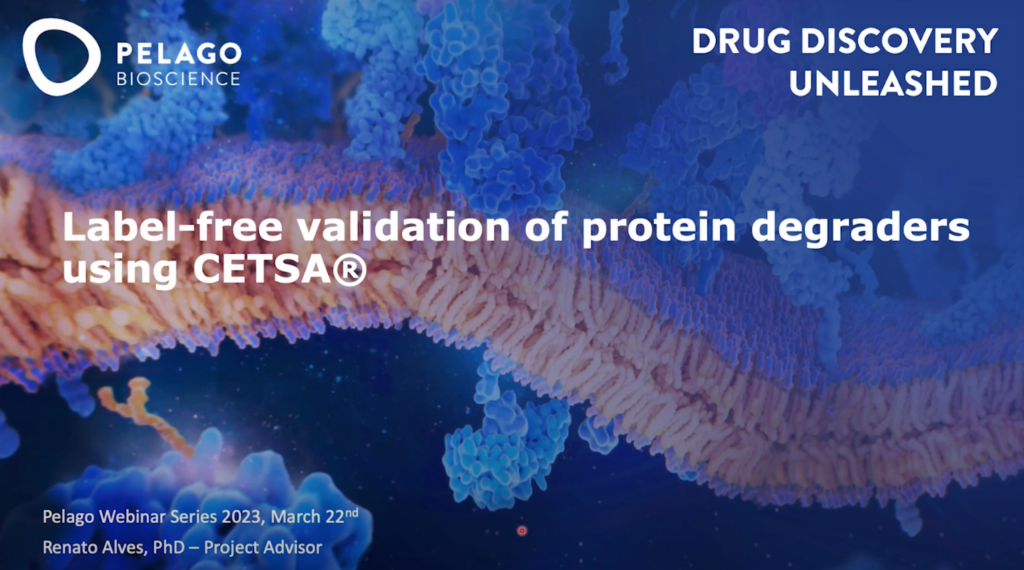
Label-free validation of protein degraders using CETSA®
In this webinar, you will learn how Pelago Bioscience can support the early stages of hit identification and validation in a high throughput manner with CETSA® Navigate HT and how CETSA® Explore provi…
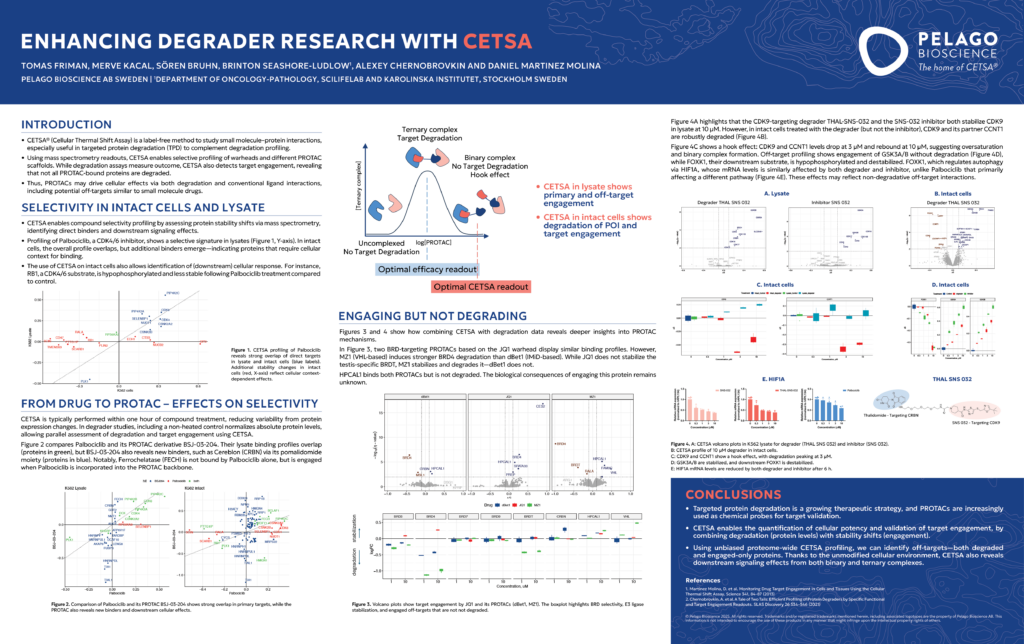
Targeted Protein Degradation – Enhancing Degrader Research with CETSA®
Unlocking New Insights into Targeted Protein Degradation with CETSA: Revealing Both Target Engagement and Off-Target Effects In the rapidly evolving field of targeted protein degradation (TPD), unders…
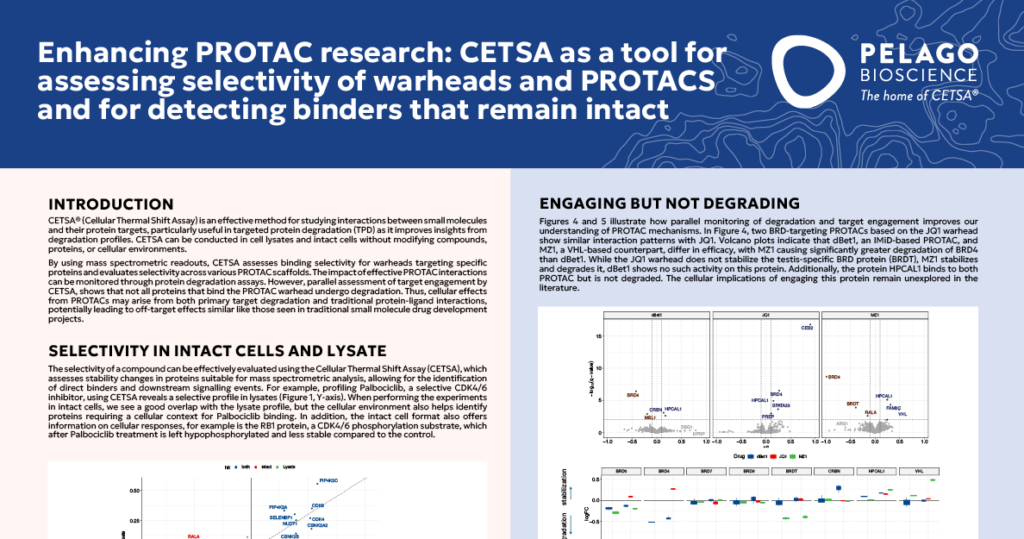
CETSA as a tool for assessing selectivity of warheads and PROTACS and for detecting binders that remain intact
CETSA® (Cellular Thermal Shift Assay) is an effective method for studying interactions between small molecules and their protein targets, particularly useful in targeted protein degradation (TPD) as i…
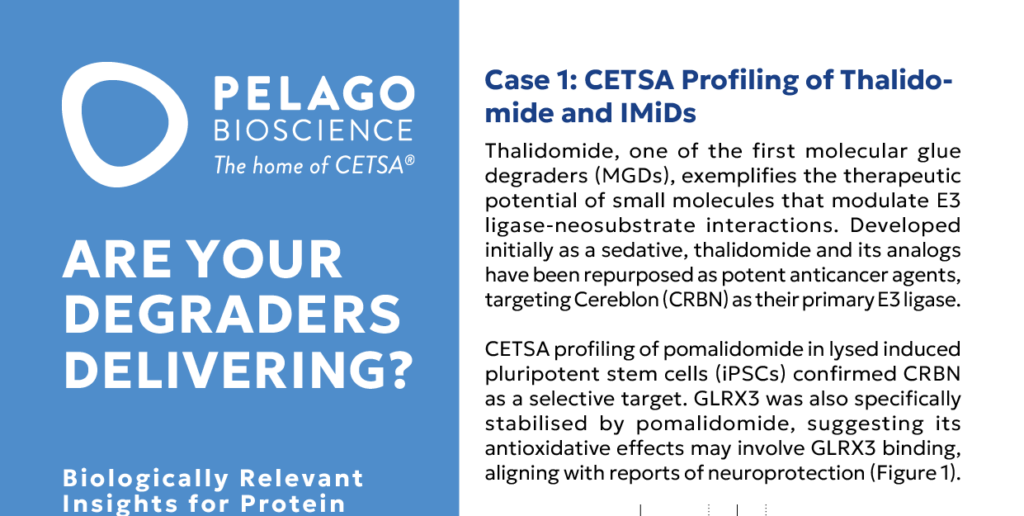
Protein Degradation – Are Your Degraders Delivering?
Uncover Mechanisms with CETSA® This application note explores how CETSA reveals target specificity and mechanisms of action, helping optimize degrader molecules for clinical success. Learn from …